
EXPERIMENT 04PROTOTYPE

Quoll

Transparent giving, from discovery to impact

Can choosing a charity feel less like a leap of faith, and more like a decision backed by evidence?
People who want to give to a cause but lack time or confidence to choose and vet a charity.View the Quoll design case study

THE PROBLEM

What is actually going wrong

Giving to a good cause is easy in principle and hard in practice. Donors need to choose between organisations, understand what their money supports, and trust that the information in front of them is useful.

That research is scattered across charity websites, reports and third-party sources. The result is friction before a donation, and little visibility after it.

WHAT I DID ABOUT IT

I built

I founded Quoll and built its technical prototype: a product concept for finding causes, comparing charities and following a donation through a donor dashboard.

Jackson Cheng designed the product experience. His case study documents the interface and donor journey developed with Quoll during its early prototyping.

TRY IT YOURSELF

Demo

The application runs separately. It opens in a new tab.

View the Quoll design case study
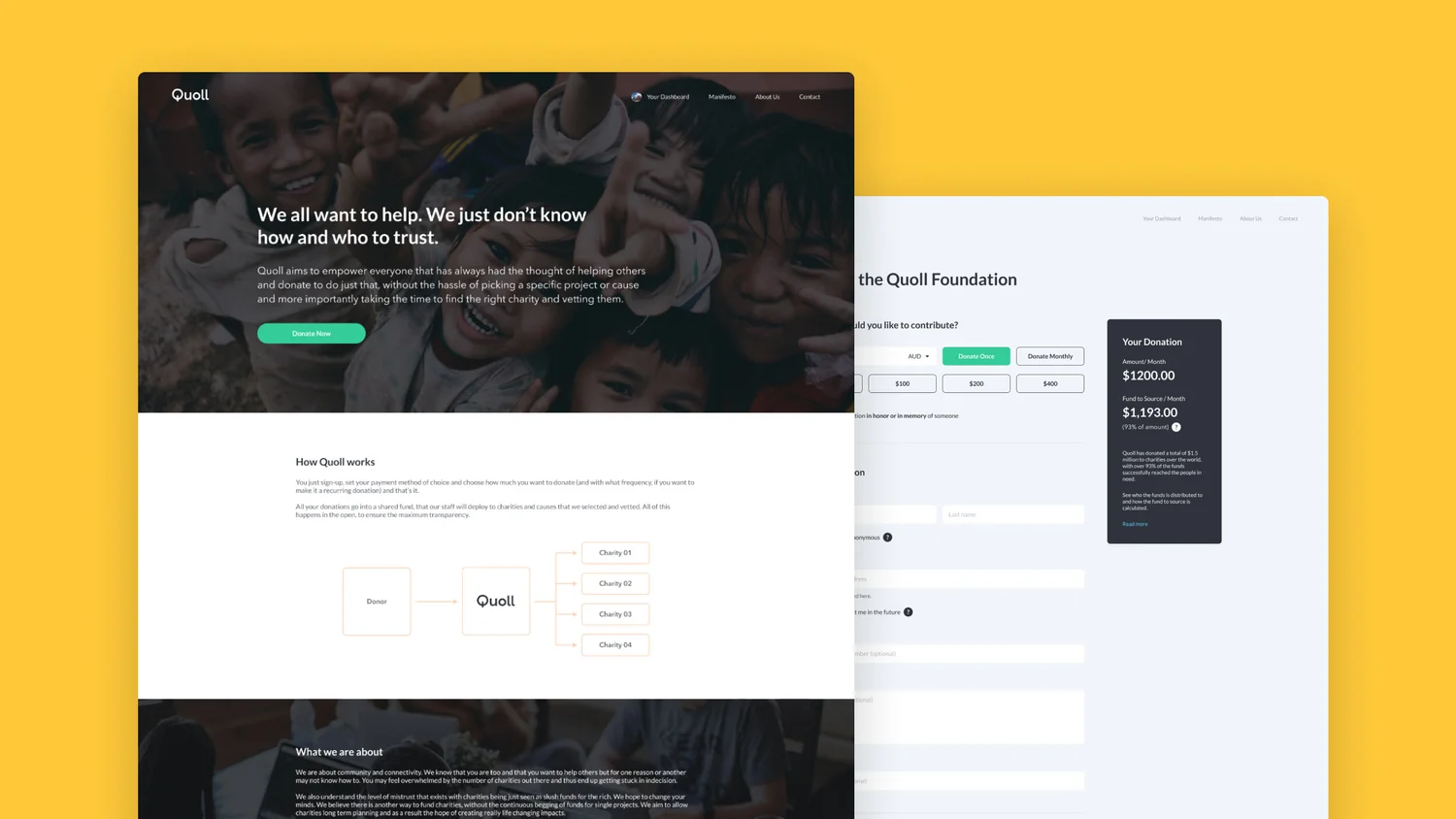
Quoll charity donation website showing its cause discovery and fund selection experience.
The case study introduces the donor journey as a guided decision, not a generic donation form.
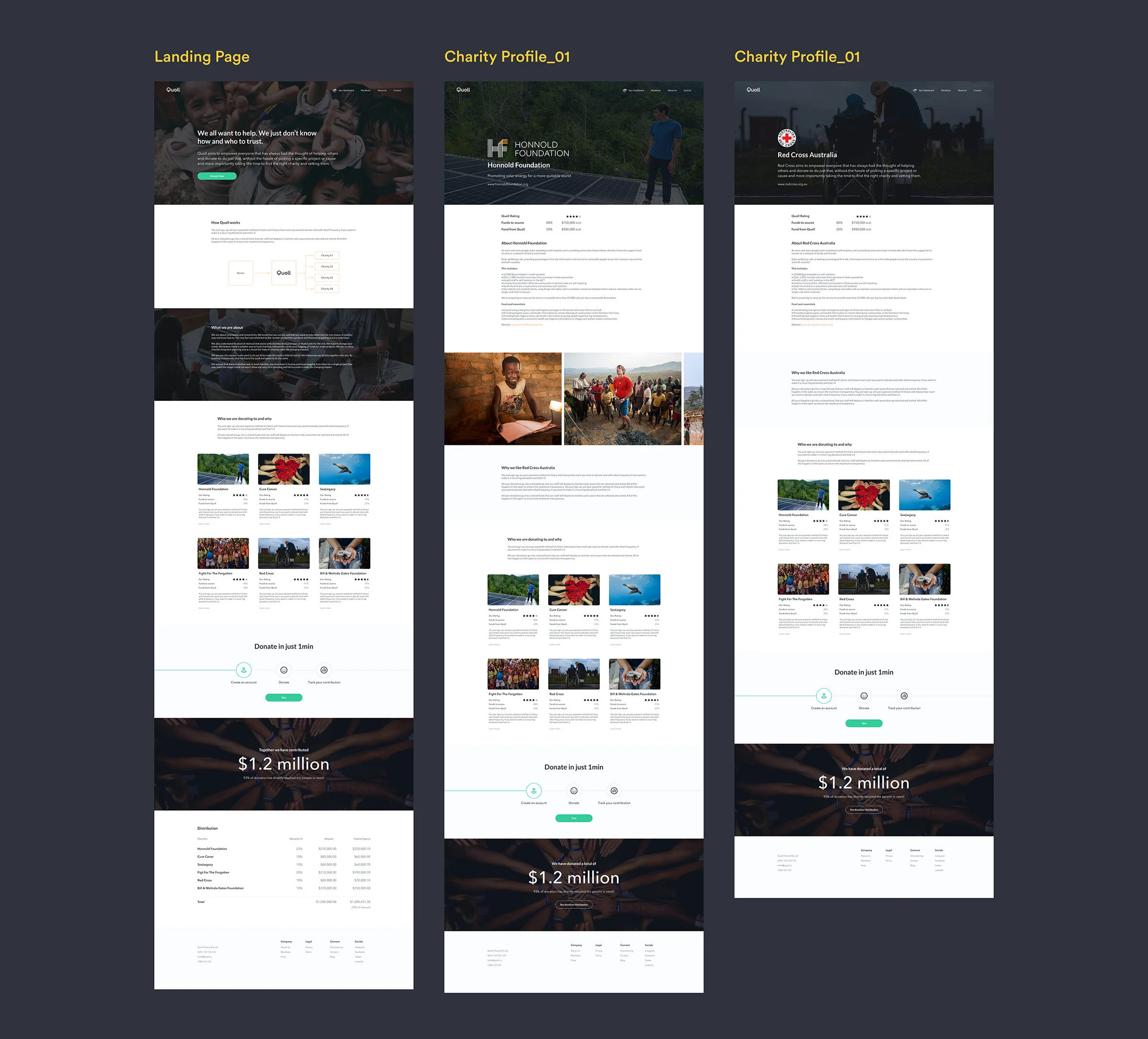
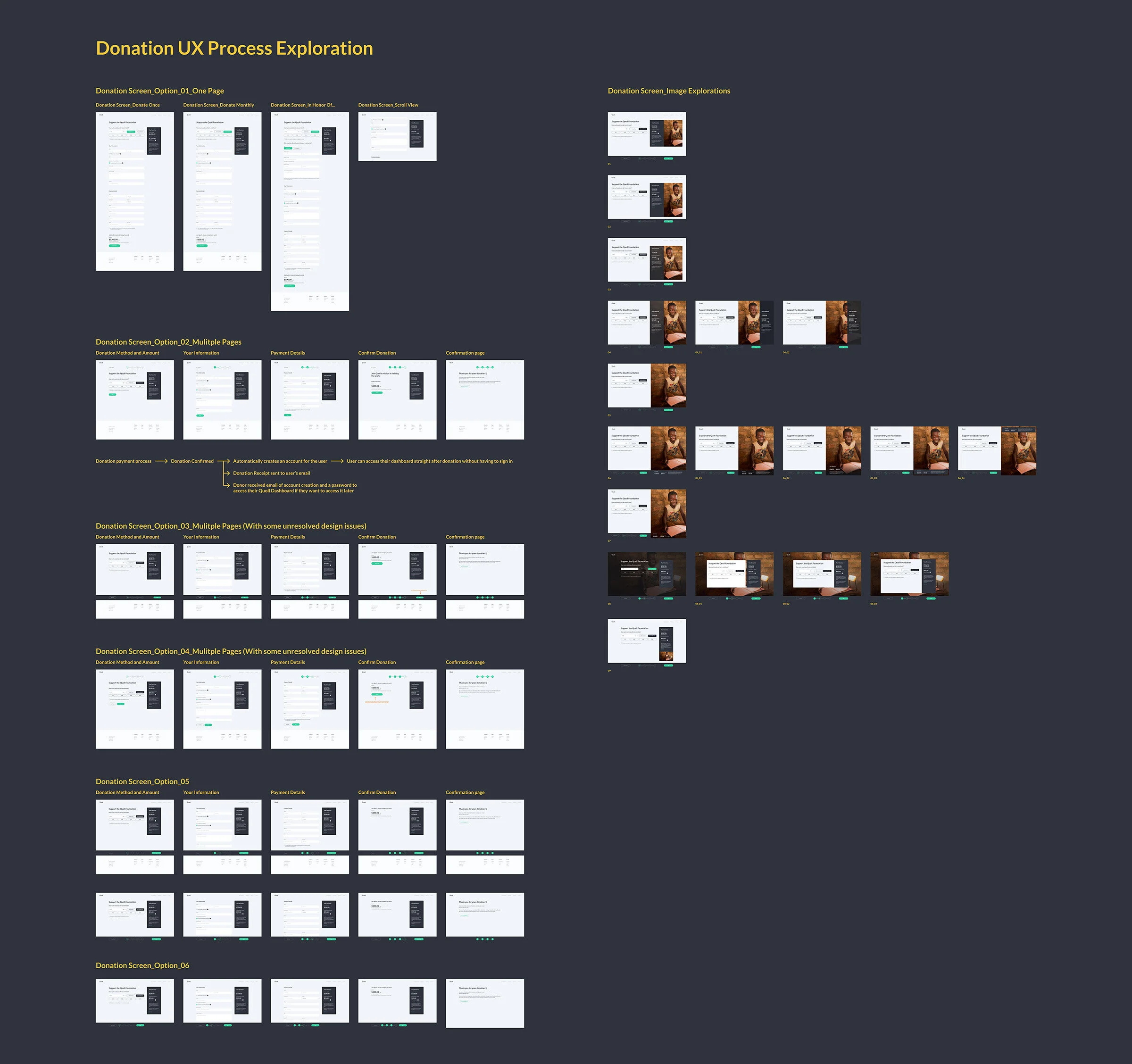
Quoll product screens showing cause selection and donation flow concepts.
Concept screens for helping a donor narrow a cause and understand where their contribution goes.
Quoll product screen showing charity and project information.
Structured charity and project information gives a donor a clearer basis for comparison.
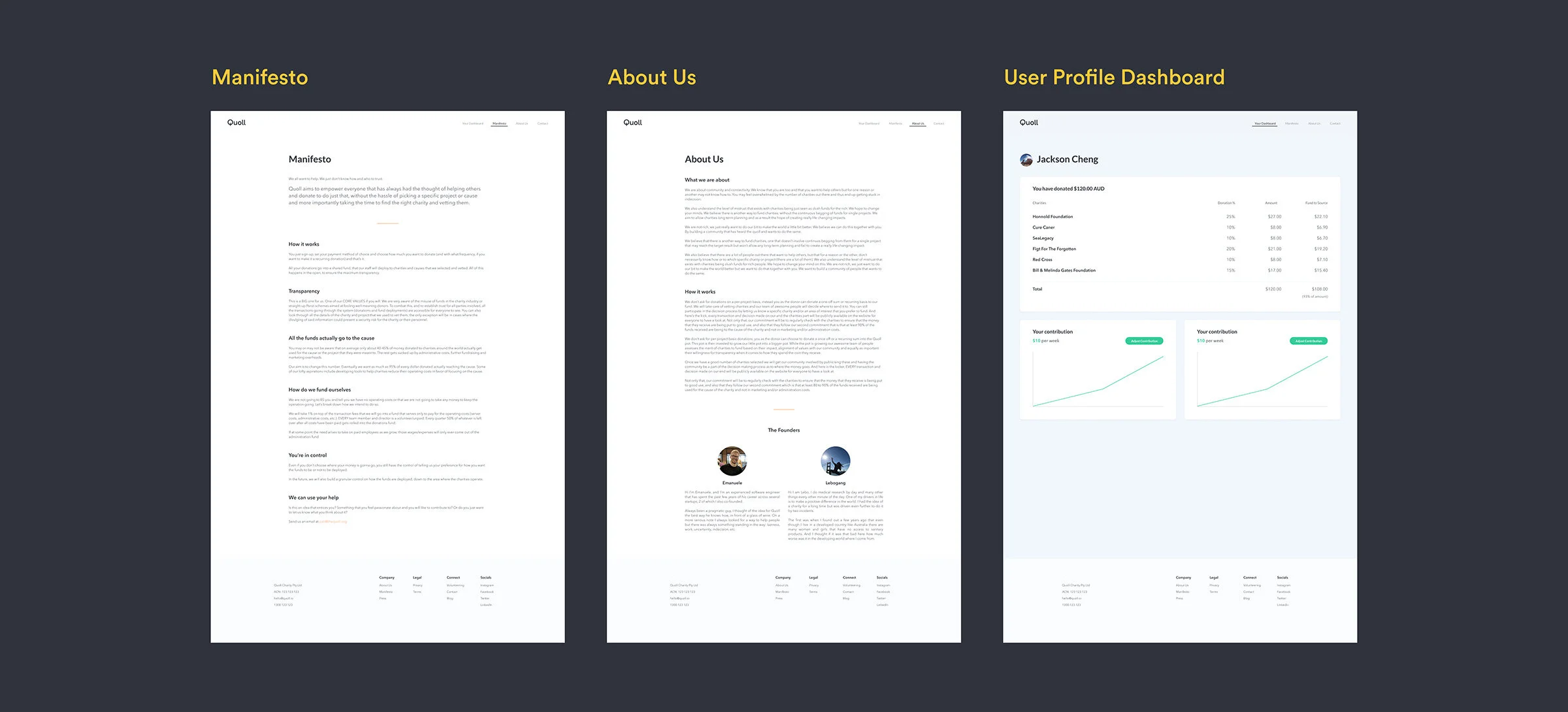
Quoll product screens showing the donation and donor journey.
The donation journey carries the donor from choice through to a visible contribution.

BEFORE AND AFTER

What changed

Before

Varies by charity
  1. 01Choose a cause
  2. 02Search across separate sources
  3. 03Try to assess a charity
  4. 04Donate
  5. 05Wait for updates

After

One guided flow
  1. 01Choose a cause
  2. 02Compare charities and projects
  3. 03Donate
  4. 04Follow the intended use of funds

CHARITY DISCOVERY

Separate sourcesOne guided flow

COMPARISON

Hard to standardiseComparable profiles

POST-DONATION VISIBILITY

LimitedDonor dashboard

ARCHITECTURE

How does it work?

  1. 01

    Causes and charities

    Structured profiles give donors a consistent place to understand a cause, a charity and the projects it supports.

  2. 02

    Research layer

    Ratings, reviews and donation information provide the evidence a donor uses to compare options.

  3. 03

    Donation journey

    A guided flow turns a donor decision into a selected cause, charity and contribution.

  4. 04

    Donor dashboard

    A personal view keeps the donation and its intended fund deployment visible after the transaction.

The technical challenge was not simply accepting a donation. It was carrying enough context through the journey that a donor could make a decision and revisit it later.

ENGINEERING

Engineering notes

NOT PUBLISHED

No engineering article has been published for this experiment yet.

BUSINESS IMPACT

What could this mean for a real business?

  • POTENTIAL

    A clearer comparison and donation flow could reduce the effort required to choose a cause with confidence.

  • POTENTIAL

    Making intended fund deployment visible could give donors more reason to return and give again.

Observed means measured in a real engagement. Estimated is reasoned from the work but not measured. Potential is what the approach makes possible. Nothing here is dressed up as more than it is.

WHAT FAILED

What didn't work

The early prototype tried to make donation decisions feel fully transparent through product design alone.

A clear interface can organise available information, but it cannot by itself verify how every charity uses funds or establish the trust that the product depends on.

WHAT CHANGED

The work stayed grounded in the evidence a product could actually show: structured charity and project information, donor-visible transactions, and clear limits on what the prototype could substantiate.

CODE

See the implementation

ARCHITECTURE ONLY

The prototype implementation is not public. The published design case study shows the donor experience and the product reasoning behind it.

SHARE AND ENJOY

Share and enjoy

Tell me what's going on. I'll come back within a business day, and if I'm not the right person for it I'll say so.

What are you after?

Pick as many as apply.

50 people
1200+

First step is a free half-hour call. No pitch deck, no obligation. Prefer plain email? Reach me directly at [email protected].