
EXPERIMENT 07ARCHIVED

Amity Messenger

A native Android messenger, built from the ground up

Can a mobile messenger make group conversation feel immediate, personal and useful enough to become a community product?
People who want to share messages, media and reactions with the groups that matter to them.Read the Amity design study

THE PROBLEM

What is actually going wrong

Messaging is a crowded category. A new app has to make the basic loop feel effortless before anyone has a reason to invite the next person.

The product needed to support more than a stream of text. Groups share photos, video and reactions, and the app had to keep those interactions legible on a small screen.

WHAT I DID ABOUT IT

I built

I designed and developed Amity Messenger for Android from the ground up, taking the product from an empty project to a beta launch in September 2016.

The beta supported group conversation, shared media and expressive reactions in a native mobile experience. The later Amity design study documents the broader community-product direction that followed.

TRY IT YOURSELF

Demo

The application runs separately. It opens in a new tab.

Read the Amity design study
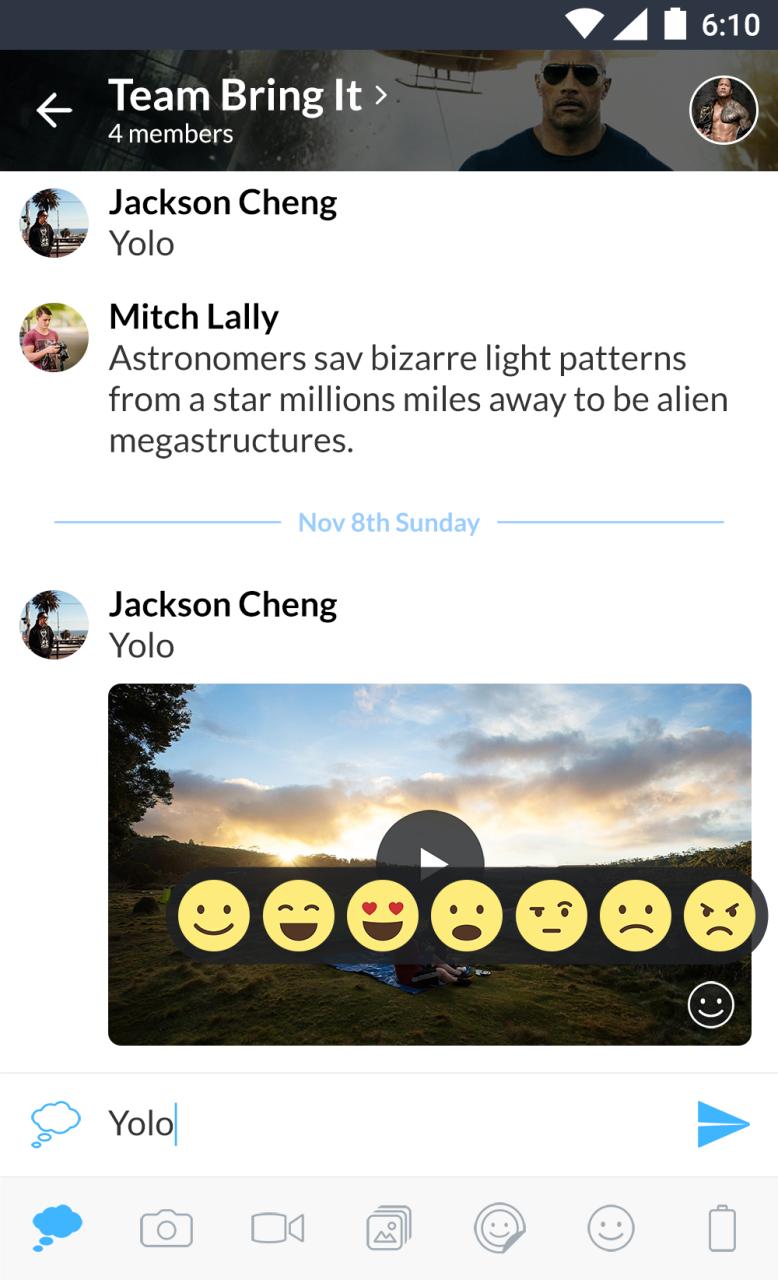
Amity Messenger Android group conversation with a shared video and reaction controls.
Group messaging, shared media and reactions in the Android beta.

BEFORE AND AFTER

What changed

Before

A basic conversation feed
  1. 01Open a generic message thread
  2. 02Send text or media
  3. 03Try to follow the group conversation

After

A group-first mobile conversation
  1. 01Join a group
  2. 02Share messages or media
  3. 03React and reply in context
  4. 04Follow the conversation

CONVERSATION

Text-first threadMessages, media and reactions

GROUP CONTEXT

Easy to loseVisible in the thread

RESPONSE

Reply onlyReply or react

ARCHITECTURE

How does it work?

  1. 01

    Identity and groups

    Accounts and group membership determine who can take part in a conversation.

  2. 02

    Conversation stream

    Messages, replies and reactions are arranged as a readable timeline for the group.

  3. 03

    Media sharing

    Photos and video travel through the same conversation flow without becoming a separate experience.

  4. 04

    Native Android client

    The app keeps interaction responsive and gives messages, media and reactions a mobile-first interface.

The product had to make several kinds of interaction feel like one conversation. Text, media and reactions could not compete for separate parts of the interface.

ENGINEERING

Engineering notes

NOT PUBLISHED

No engineering article has been published for this experiment yet.

BUSINESS IMPACT

What could this mean for a real business?

  • OBSERVED

    The Android beta launched in September 2016 and gathered 300,000 downloads.

  • POTENTIAL

    A group-first messenger could give a community a more focused place to converse than a generic social feed.

Observed means measured in a real engagement. Estimated is reasoned from the work but not measured. Potential is what the approach makes possible. Nothing here is dressed up as more than it is.

WHAT FAILED

What didn't work

Treating the messenger as a text-only product.

Group conversation quickly includes photos, video and lightweight responses. A text-only thread makes those interactions feel bolted on and obscures what the group is reacting to.

WHAT CHANGED

The Android experience treated media and reactions as first-class parts of the conversation flow, so a group could share and respond without leaving the thread.

CODE

See the implementation

ARCHITECTURE ONLY

The beta application was commercial work and its Android source remains private. The design study records the subsequent Amity product direction.

SHARE AND ENJOY

Share and enjoy

Tell me what's going on. I'll come back within a business day, and if I'm not the right person for it I'll say so.

What are you after?

Pick as many as apply.

50 people
1200+

First step is a free half-hour call. No pitch deck, no obligation. Prefer plain email? Reach me directly at [email protected].